
|
|
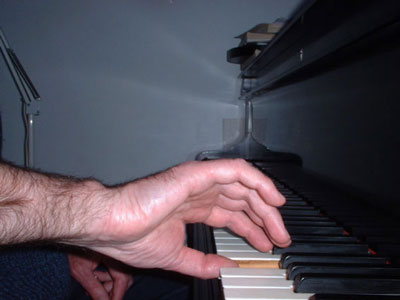
| 4. The thumb is played by rotating the forearm back again (pronating). This brings the thumb the extra distance to reach the F and plays the note at the same time. | |

|

|
| 5. The hand begins to glide over the thumb as soon as the F has been played. The hand and arm move in one piece — almost in a straight line. The second finger is now ready to play the G. This will require no supination, as the movement should be saved for the fourth finger on the B. (Supinate on the finger before the thumb and pronate back when playing the thumb). I have not shown the G being played as it requires no special movement. | |
| PREVIOUS PAGE |
NEXT PAGE |
